How we built it
A break that starts with one ticket
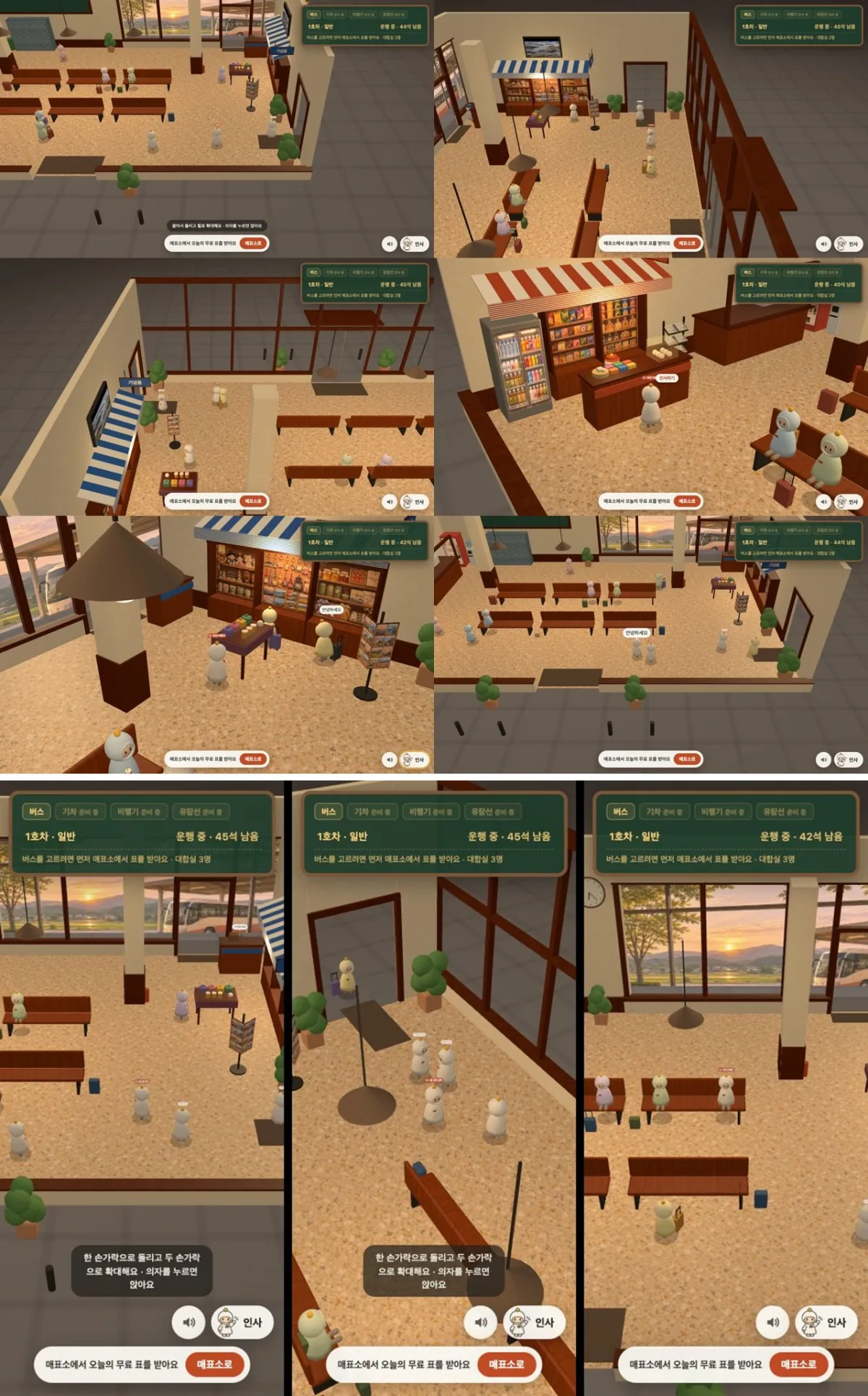
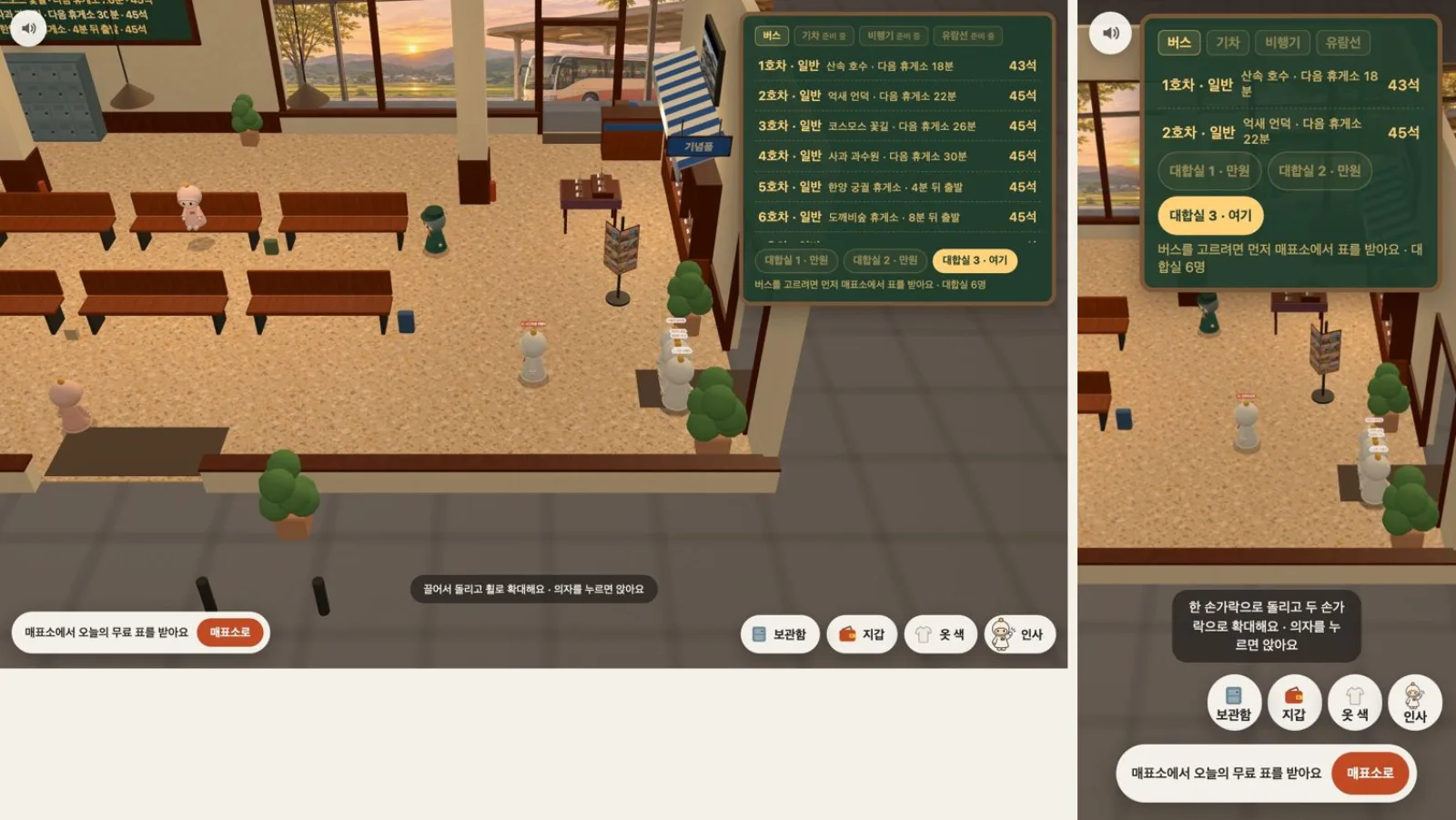
Gateway starts in a 3D terminal waiting room. Tap the screen to walk, tap a chair to sit, and pick up one free ticket a day at the ticket office. Choose a bus from 1 to 10 on the departure board, pick an empty seat on the seat map, and walk out through the gate to board.
Regulars move through the waiting room on their daily routines, and you can spend time at the kiosk, the gift shop or the window-side coffee shop. When it gets busy, waiting rooms 2 and 3 open on their own.
Everyone sees the same view
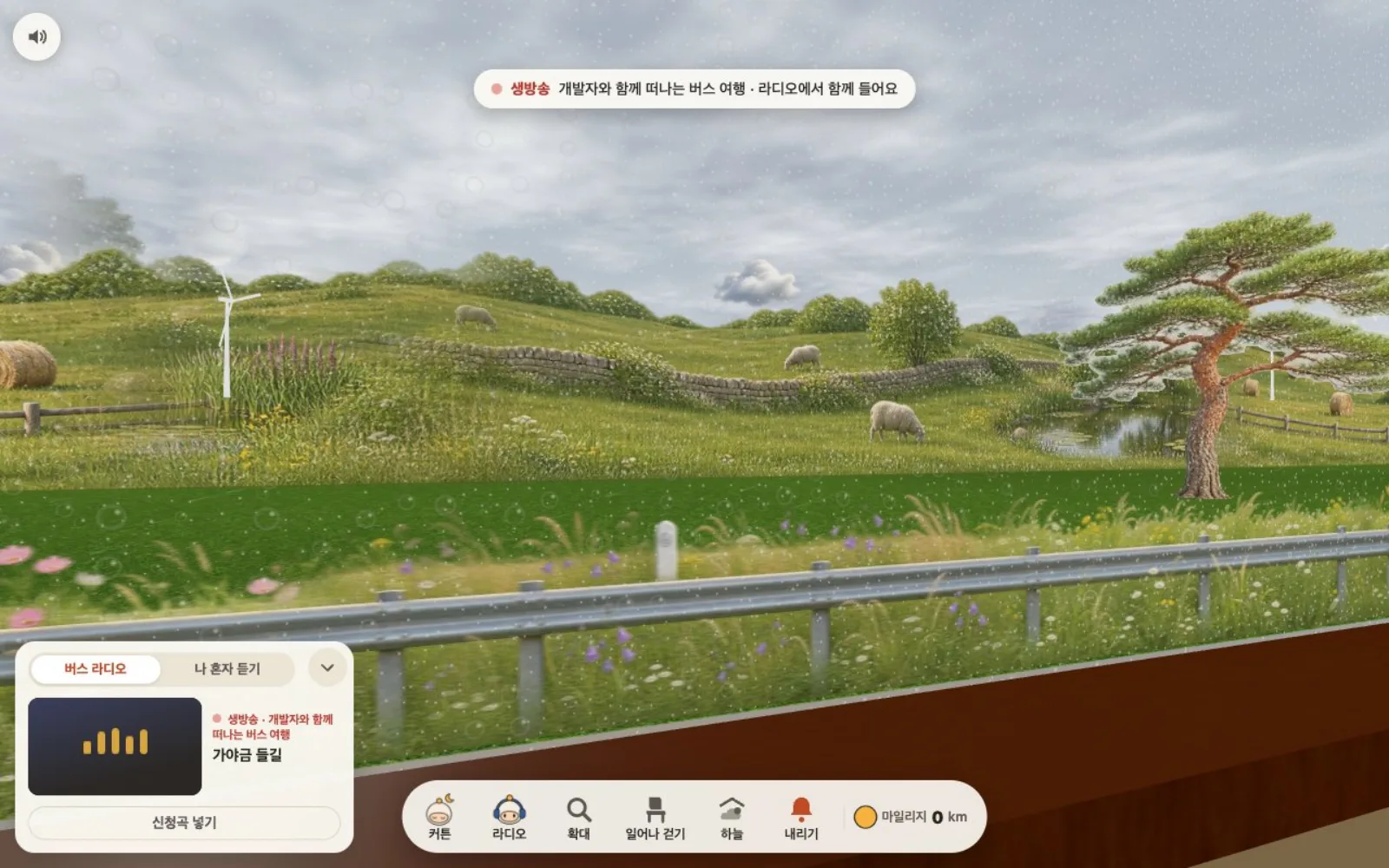
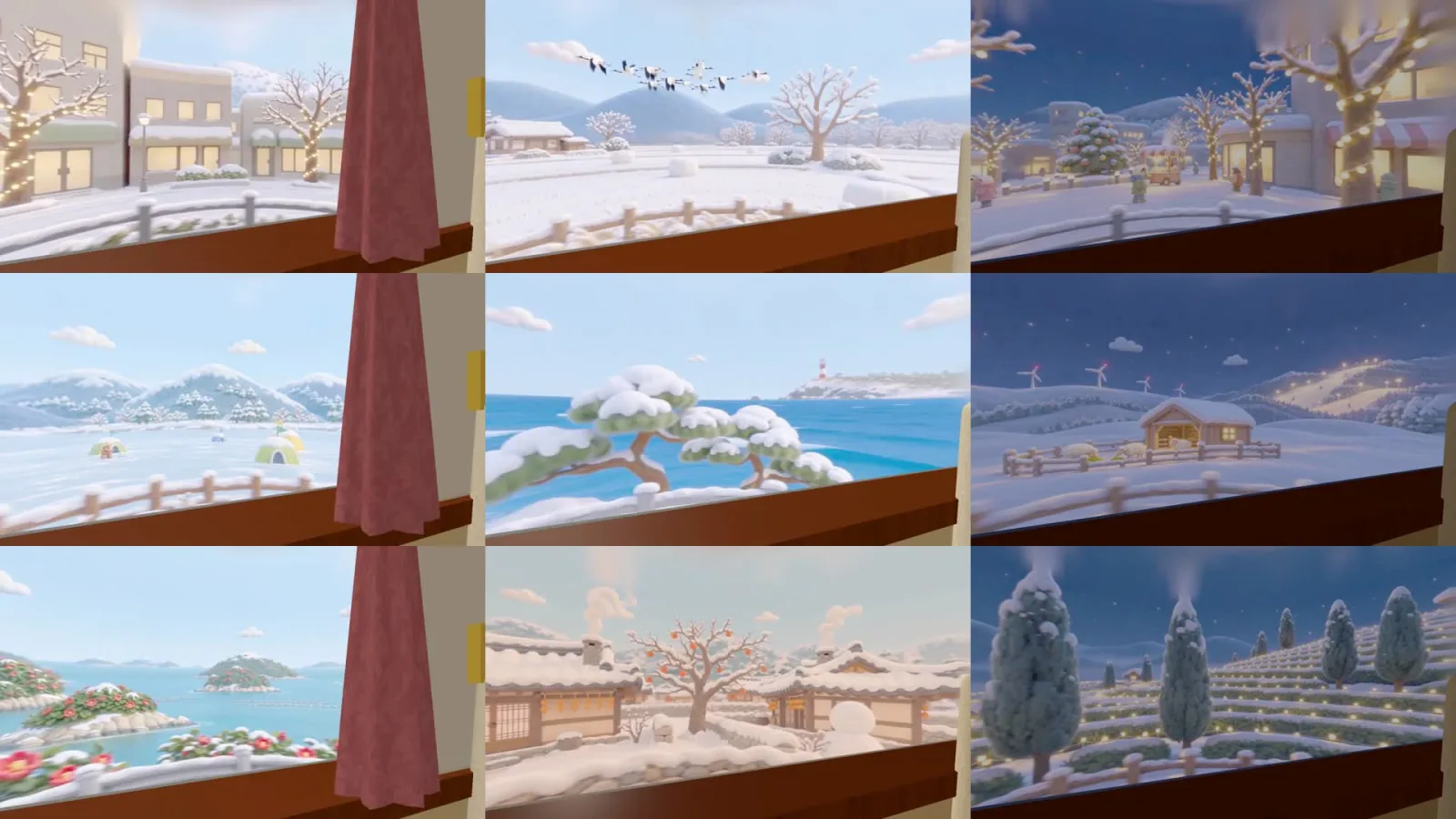
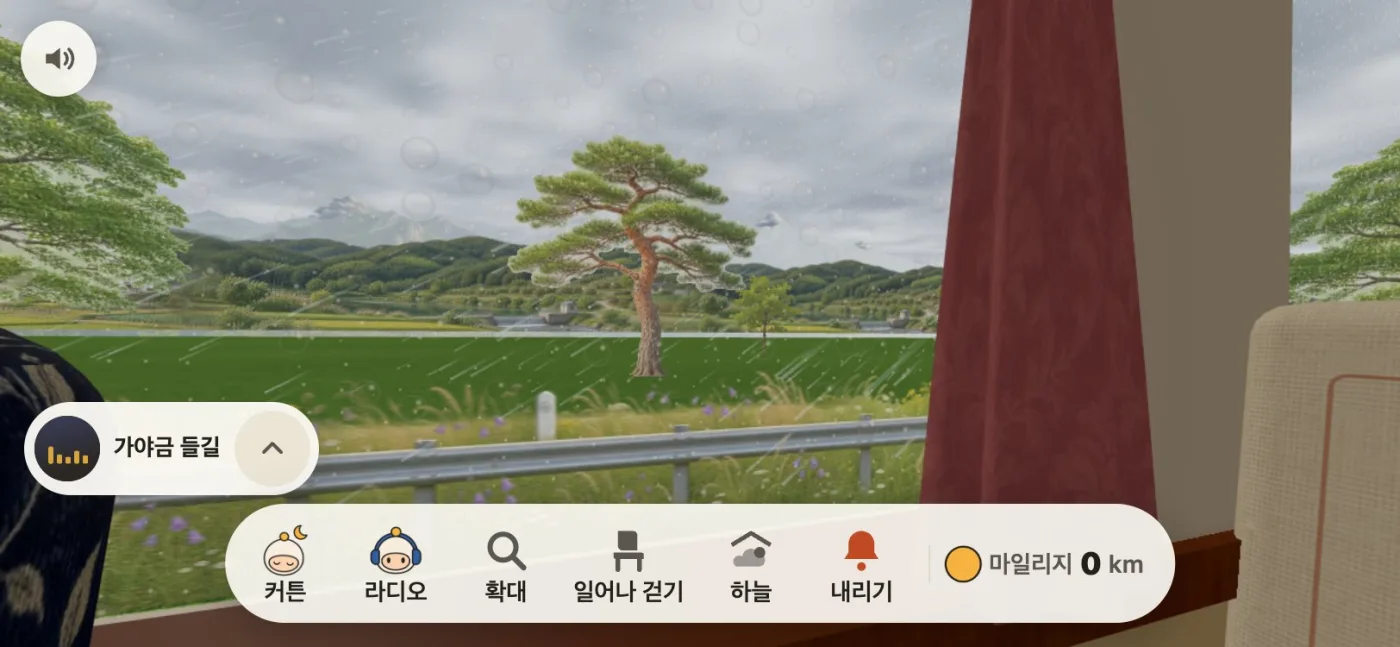
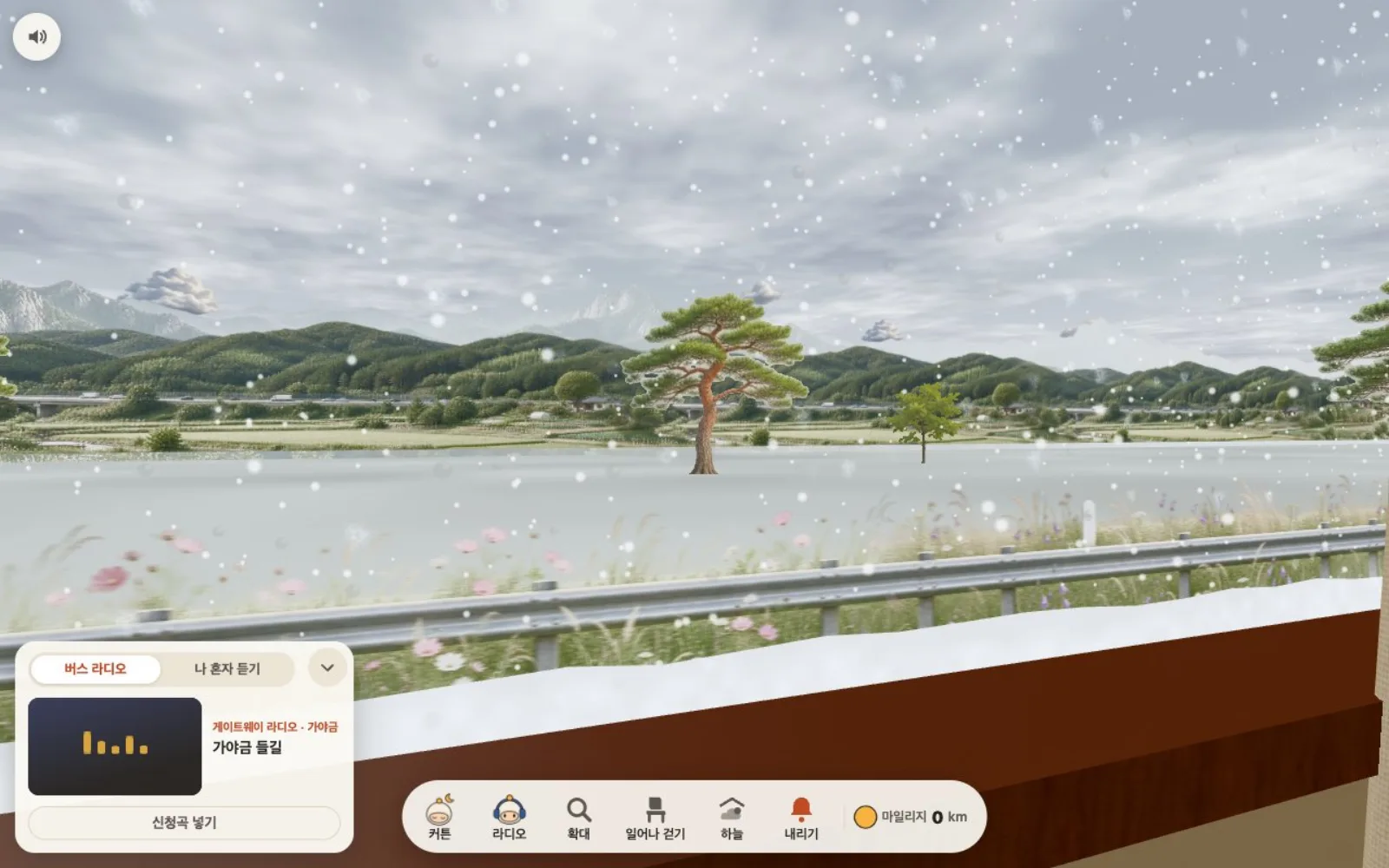
Buses 1 to 10 run all the time, four minutes apart. Each bus is one room on the server, and its position is calculated from the departure time, so everyone on the same bus sees the same scenery at the same moment. The 100 km route links 20 places, such as city streets, fields, Daegwallyeong, the East Sea and the southern archipelago.
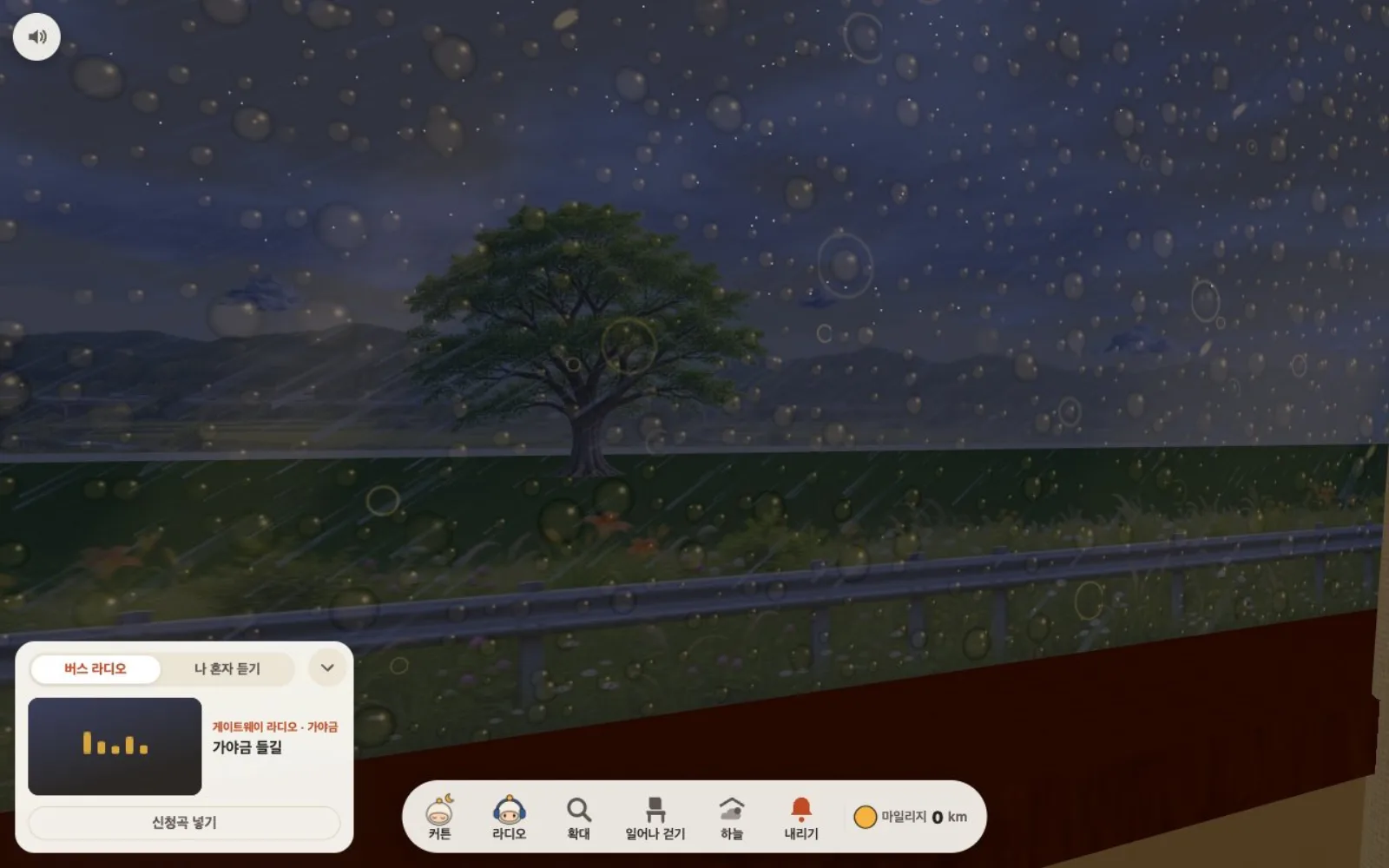
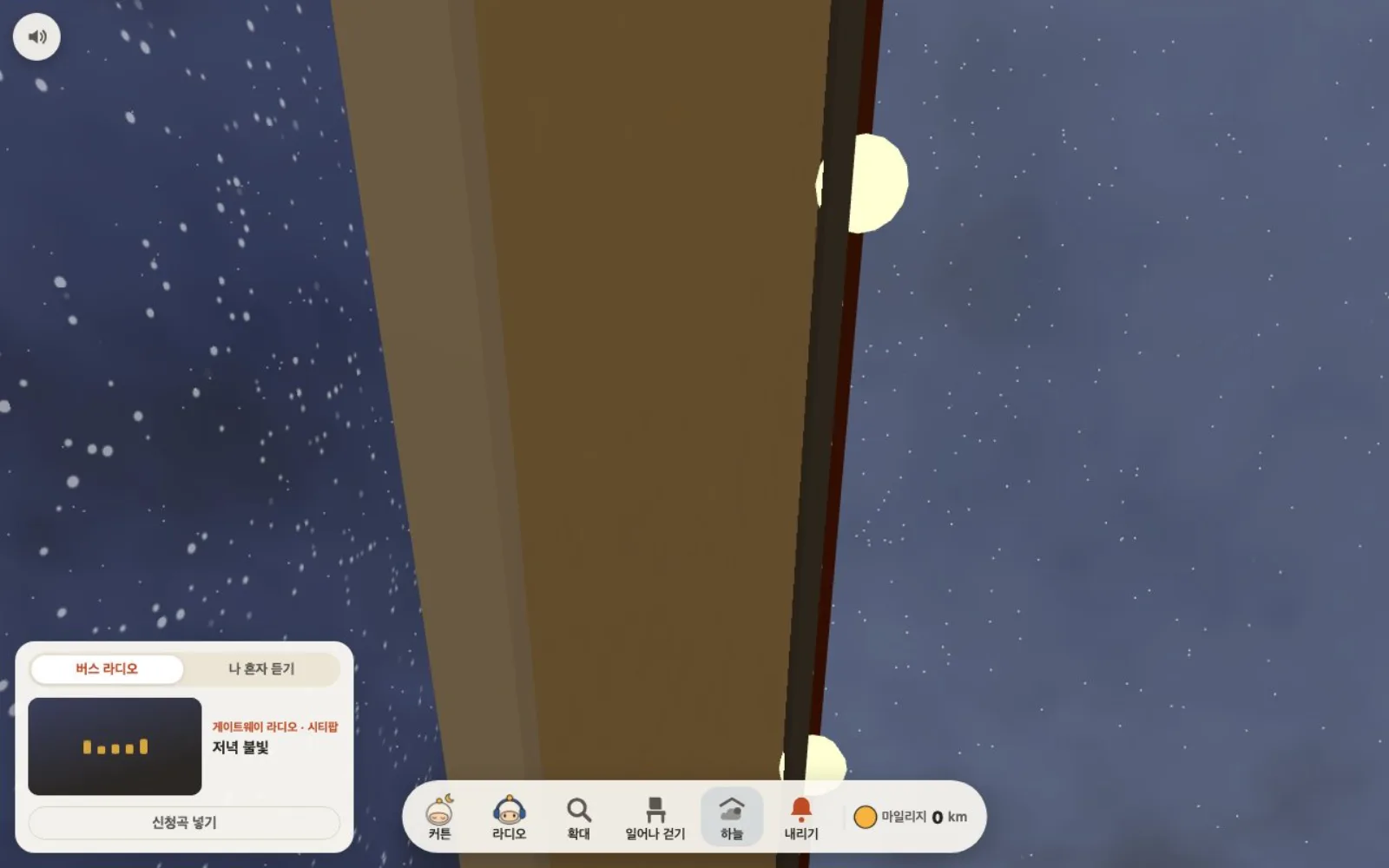
Day and night follow Korean time, and five kinds of rain and three kinds of snow hit the window, cling and melt. Open the glass roof to see the stars at night.
Themed rest stops every 30 minutes
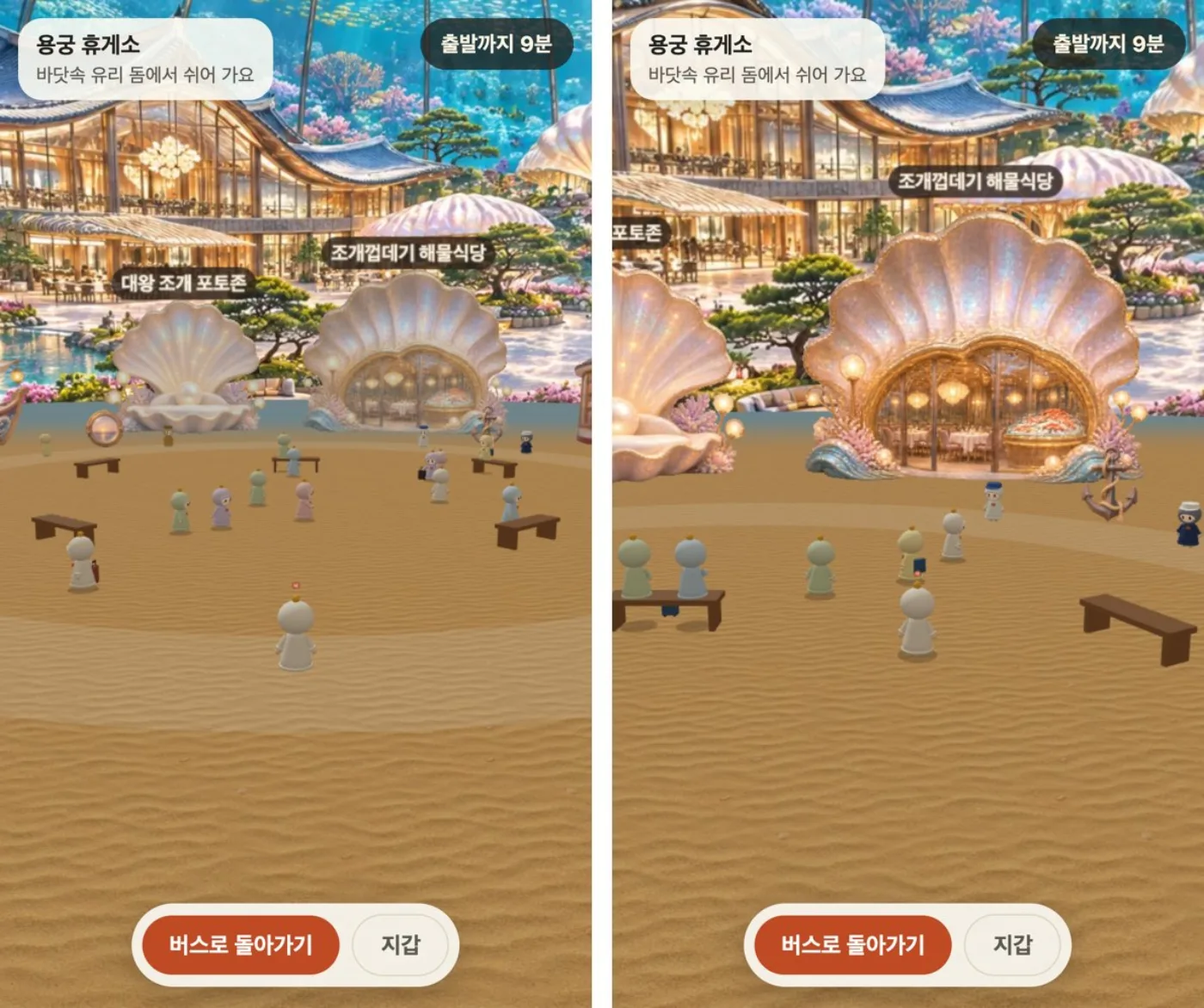
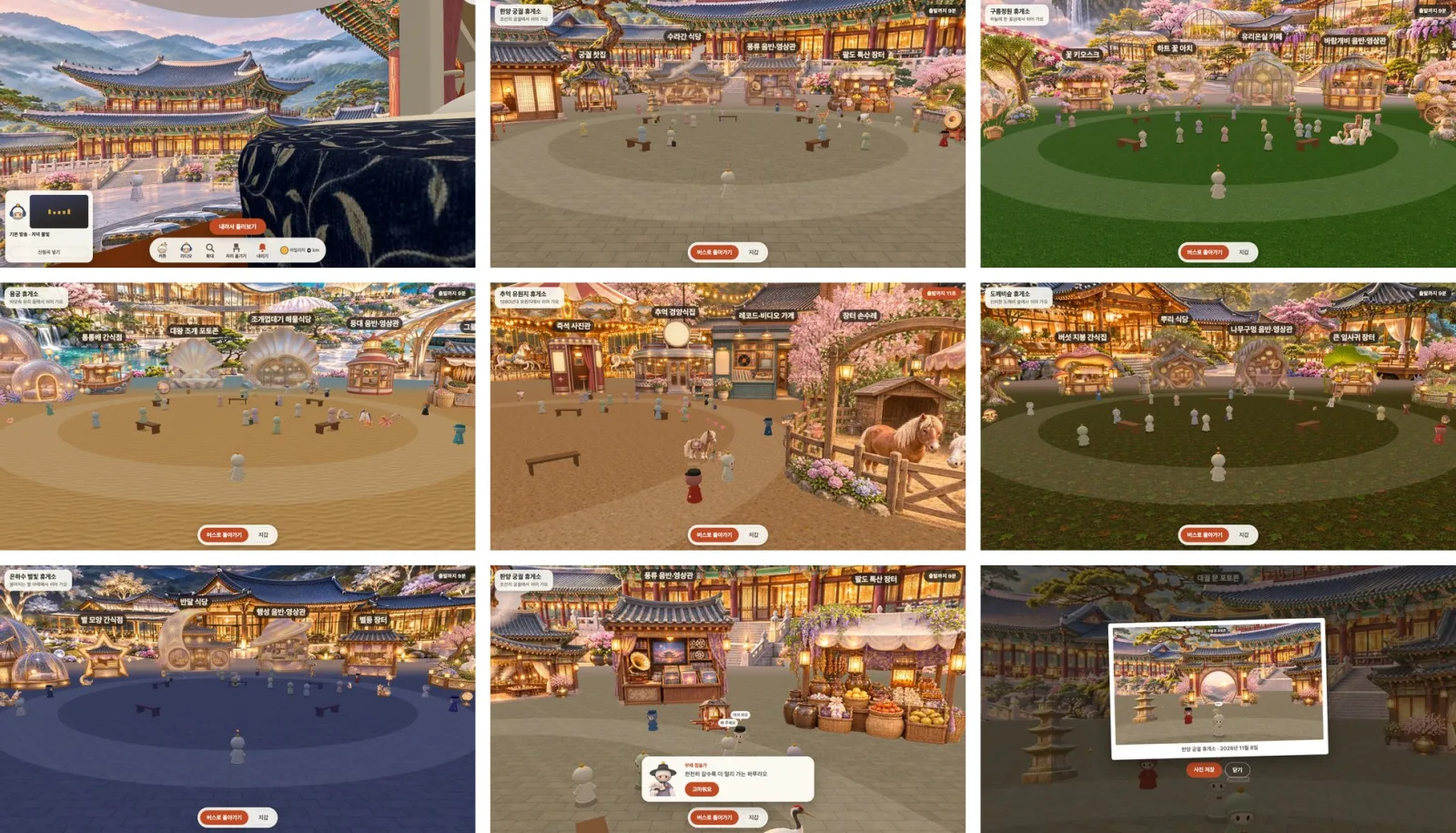
The bus drives for 30 minutes, then stops at a rest stop for 10. There are six fantasy rest stops, and each bus stops at a different one. Get off to look around the plaza, walk between buildings where staff and visitors go about their business, and take a souvenir photo.
Each rest stop has its own sounds and goods, and collecting stamps earns mileage. When you get off, you receive a mileage card for the distance you rode.
Bus radio, heard together
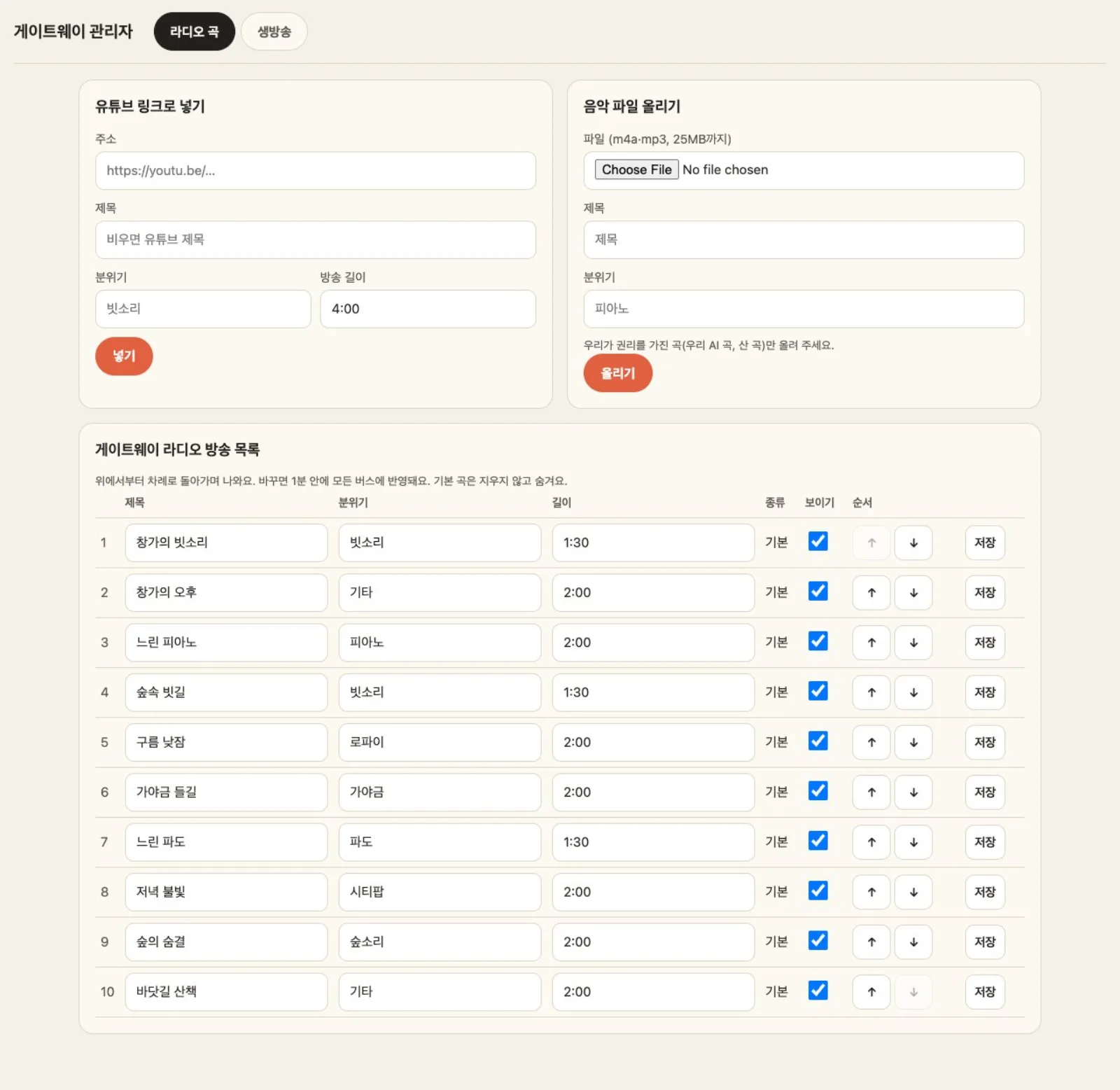
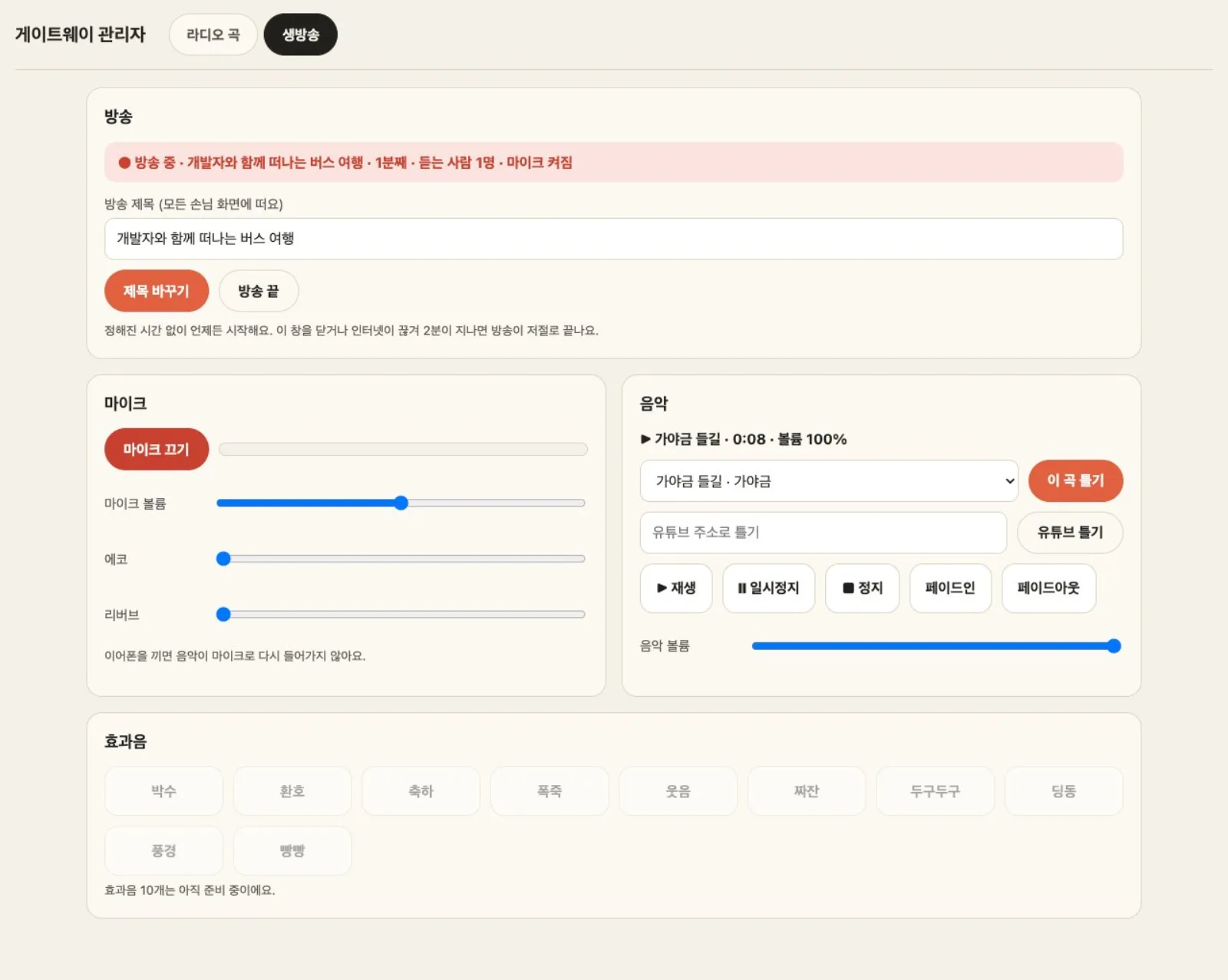
Everyone on a bus hears the same song at the same moment. Gateway radio plays by default, and you can request a favorite YouTube song or add it to a list just for yourself. Operators add, edit and hide radio tracks from the admin screen.
Data lives in Supabase, and real-time shared rides run on Cloudflare Workers and Durable Objects, with no errors in a test of 5,000 concurrent users. A live DJ radio has been built but is on hold for now.